If you are reading this, you have probably already done the math the wrong way. You found a number online — maybe $150 per square foot, maybe $300 — multiplied it by your dream square footage, and landed on a number that felt either terrifying or suspiciously low. We understand. After 25 years of building custom homes across Greensboro and the Triad, we have sat across the table from hundreds of families at that exact moment.
Here is what we tell them: the per-square-foot number is a starting point, not a budget. The real number depends on your land, your plans, your finishes, your site conditions, and a dozen line items that never show up in an online calculator. This guide breaks down what it actually costs to build a custom home in North Carolina — specifically in the Piedmont Triad — so you can plan with your eyes open.
Statewide, builder-grade construction in North Carolina runs about $180 to $250 per square foot, while custom homes typically run $250 to $450 per square foot before land and site work. In the Triad, mid-range custom builds often land between $165 and $225 per square foot for construction, with premium finishes pushing higher. Land, permits, utilities, and site prep are additional — often adding $50,000 to $120,000 or more.
Construction Cost per Square Foot in NC
Let's start with the number everyone asks for. According to HomeGuide's 2026 NC construction data, the cost to build a house in North Carolina runs $180 to $250 per square foot for a basic home with builder-grade finishes, and $250 to $450 per square foot for custom-built homes with upgraded materials and finishes.
Here in the Triad, costs tend to run slightly below the state's major metro averages. Cost-to-Build data shows the Greensboro/Winston-Salem area running about $162 to $208 per square foot for mid-range custom construction and $208 to $268 for premium custom — competitive with the state average, thanks to stable labor rates and relatively forgiving Piedmont terrain.
For early planning, here is a realistic framework by finish level:
| Finish Level | Cost / Sq Ft (NC) | 2,500 Sq Ft Home (Construction Only) |
|---|---|---|
| Builder-grade / spec | $135 – $165 | $337,500 – $412,500 |
| Mid-range custom (Triad) | $165 – $225 | $412,500 – $562,500 |
| High-end custom | $225 – $325 | $562,500 – $812,500 |
| Luxury / fully custom | $325 – $500+ | $812,500 – $1.25M+ |
Sources: HomeGuide NC construction costs (2026); CostToBuildHouse Triad regional data (2026). These are planning ranges, not a quote. Your actual cost depends on plans, site, finishes, and permitting.
What the Per-Square-Foot Number Does Not Include
This is where most online calculators stop — and where most families get surprised. The per-square-foot figure covers the structure itself: foundation, framing, roofing, siding, plumbing, electrical, HVAC, insulation, drywall, and interior finishes. It does not include:
- Land — obviously, but it needs to be said. If you don't already own a lot, that's a separate line item entirely.
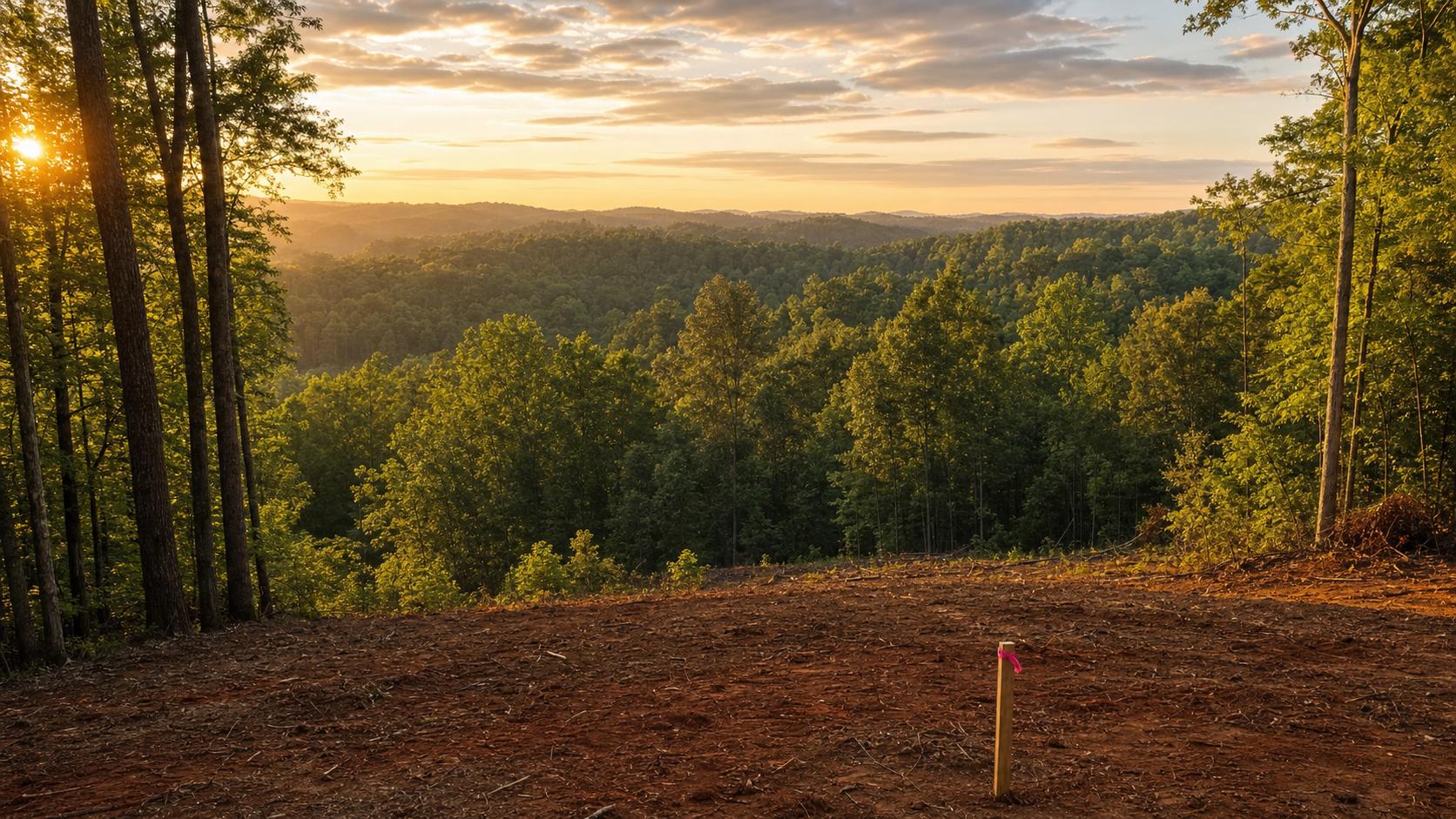
- Site preparation — clearing, grading, driveway installation, erosion control. A wooded lot in Summerfield or Oak Ridge with a long driveway can add $15,000 to $40,000 before a single footer is poured.
- Utilities — connecting to municipal water and sewer, or drilling a well and installing a septic system. Well and septic alone can run $12,000 to $25,000 in rural Guilford or Forsyth County areas.
- Permits and fees — building permits, trade permits, impact fees, and plan review fees. More on this below.
- Landscaping and hardscaping — grading, seeding, retaining walls, patios, walkways.
- Driveway — a 300-foot gravel driveway in Stokesdale is a very different cost than a 40-foot concrete apron in Jamestown.
Industry estimates put these soft costs and site work at $50,000 to $120,000 on top of construction, depending on the lot and region. That number can climb fast on rural acreage or lots with challenging topography.
Permitting Costs in the Triad
Permitting is where Triad specificity matters. The process and cost differ depending on whether your lot is in an incorporated town, an unincorporated area, or one of the cities that issue their own permits.
Guilford County
For new single-family residential construction in unincorporated Guilford County (which covers places like Colfax, Browns Summit, and parts of Summerfield), the county charges a base fee of $150 plus $0.35 per heated square foot, plus trade permit fees of $75 each for electrical, plumbing, and mechanical, according to the Guilford County Inspections Department. A typical 2,500-square-foot home runs roughly $1,000 to $2,500 in total permit fees depending on scope and trade inspections required.
Forsyth County and Kernersville
Kernersville issues its own permits through its Development Services department, while surrounding unincorporated Forsyth County areas go through the county. Fees are comparable — typically $500 to $2,000 for a new single-family home depending on square footage and trade scope.
High Point
High Point runs its own permitting through the Development Services Center, using the Accela online portal. Fees are similar in structure but include city-specific impact and review fees.
If you are building in one of the incorporated towns — Summerfield, Oak Ridge, Jamestown, Kernersville — you may need a local development clearance or zoning review before the county or city issues the building permit. We walk clients through this two-step process on every build. You can see the specific permitting details for each community on our Triad service-area pages.
Well and Septic vs. Municipal Utilities
In the Triad, whether your lot has municipal water and sewer or needs a well and septic system is one of the biggest cost variables — and one of the most common surprises.
If your lot is in or near Greensboro, High Point, or Jamestown, you may have access to city water and sewer, which keeps utility costs relatively predictable. But if you are building on acreage in Summerfield, Stokesdale, Browns Summit, or rural Oak Ridge, you are almost certainly looking at a private well and septic system.
- Well drilling — $5,000 to $12,000 depending on depth and geology. Piedmont wells typically run 200 to 400 feet.
- Septic system — $7,000 to $20,000 depending on soil perc test results, tank size, and drainfield type. A conventional gravity system is less; a pump or engineered system is more.
- Perc test — Required before you can design a septic system. If your lot doesn't pass, you may need an engineered system, which can double the cost.
This is exactly why we evaluate land before you sign a contract. If you are still shopping for a lot, read our guide to buying land in the Triad — it covers perc tests, setbacks, and the red flags we look for.
What Drives Cost Beyond Square Footage
Two homes with the same square footage can cost $100,000 apart. Here's why:
- Foundation type — A slab is the most economical. A crawl space adds cost but provides access for plumbing and future repairs. A full basement is the most expensive but adds usable square footage. Most Piedmont homes use crawl spaces due to soil conditions.
- Roof complexity — A simple gable roof costs less per square foot than a complex roofline with multiple valleys, dormers, or a steep pitch. Architectural shingles are standard; standing-seam metal roofing adds roughly 2.5 to 3 times the cost of asphalt.
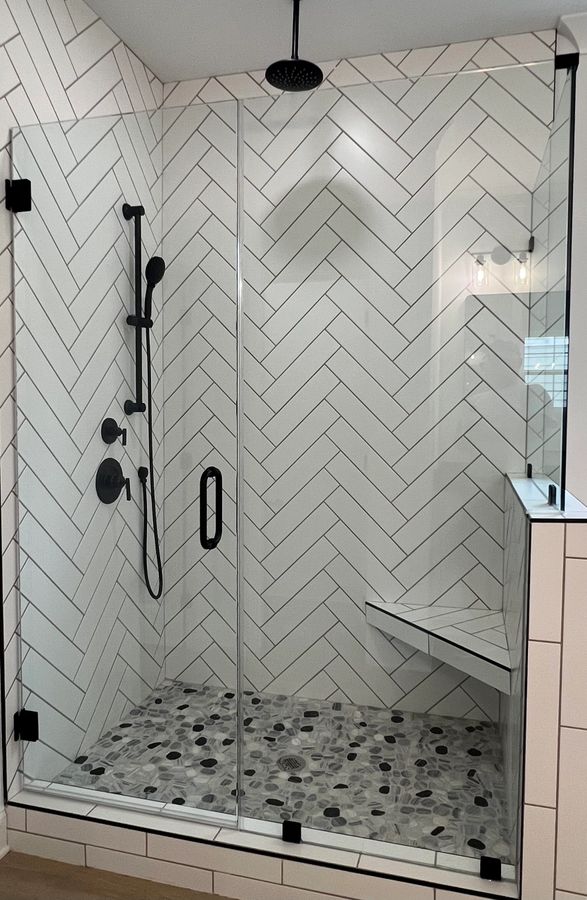
- Finish selections — This is where budgets move the most. Quartz vs. granite vs. marble. Hardwood vs. luxury vinyl tile. Stock cabinets vs. semi-custom vs. custom. The selection phase can swing a budget by $30,000 to $80,000 on a typical home.
- Site access — A flat, open lot with a short driveway is straightforward. A wooded lot on a slope with a long gravel drive requires clearing, grading, erosion control, and possibly retaining walls.
- Plan complexity — A simple rectangular footprint with standard ceiling heights costs less per square foot than a home with vaulted ceilings, multiple roof changes, custom angles, or specialized structural elements.
How BKA Builders Approaches Budgeting
At BKA Builders, we don't hand you a per-square-foot number and walk away. Every set of plans we build is drawn around your family, your land, and the way you actually live — so every budget is specific to that home, not a template.
Our process starts with a free consultation. Brian or Debbie Adams will sit down with you — whether you have land, a plan, or just a folder full of saved ideas — and walk through what is realistic for your site, your finishes, and your timeline. We talk through the line items most families forget: driveway length, well and septic, permit fees, grading, and the selection phase where budgets quietly expand.
If you already own land in the Triad, we'll walk it with you. If you're still looking, we'll help you evaluate whether a lot is buildable before you sign anything. Either way, you walk away with a clearer picture of what your home will actually cost — no pressure, no commitment.
Frequently Asked Questions
How much does it cost per square foot to build a house in North Carolina?
Statewide, builder-grade construction runs about $180 to $250 per square foot, while custom homes typically run $250 to $450 per square foot before land. In the Triad, mid-range custom builds often land between $165 and $225 per square foot, with premium finishes pushing higher.
What is not included in the per-square-foot cost?
The per-square-foot figure covers construction only. Land, site preparation, utility hookups, permits, driveways, landscaping, and sometimes wells and septic systems are additional — often adding $50,000 to $120,000 or more depending on the lot.
How much are building permits in Guilford County?
Guilford County charges a base fee of $150 plus $0.35 per heated square foot for new single-family residential construction, plus trade permit fees. A typical 2,500 sq ft home runs roughly $1,000 to $2,500 in total permit fees depending on scope.
Does BKA Builders offer free cost estimates?
Yes. The first consultation with BKA Builders is always free. Brian or Debbie Adams will review your plans, your land, and your finish expectations, and give you a realistic picture of what your build will cost.
Want to know how long your build will take? Read our companion guide: How Long Does It Take to Build a Custom Home?